
I live with anxiety, ADHD, and panic disorder, so while I can’t fully know your experience (because I’m me and you’re you), I do get it—and I care deeply about understanding it. I don’t just study this stuff; I live with it, notice it, question it, and build my work around what actually helps in real life. I’m a total nerd about how the brain works and love spotting patterns (especially the “why does my brain keep doing this?” kind). Outside of sessions, there’s a good chance I’m playing Fortnite or talking about Fortnite, because sometimes regulation looks like dropping in, looting up, and letting your nervous system breathe.



Hey, I’m Sam
I work with people who are tired of feeling like they’re “too much,” “behind,” or somehow doing life wrong. If you’re anxious, burned out, neurospicy, or quietly questioning everything—and don’t need another person telling you to just try harder, let’s talk. Therapy with me is real, conversational, and focused on understanding why things feel hard so we can actually do something about it. No therapy theater, no jargon, no pretending you’re fine when you’re not. Just honest work, a little humor when it helps, and space to finally make sense of yourself.
My Approach
I believe therapy works best when it feels like a genuine conversation—not a scripted process or a place where you have to perform being “okay.” My approach is warm, collaborative, and honest, with a healthy dose of curiosity and humor when it fits. I’ll help you understand the patterns, thoughts, and behaviors that may be keeping you stuck, while also challenging you when it’s needed. Together, we’ll focus on building insight that actually translates into real life—not just having good conversations for an hour. My goal is to help you better understand yourself, feel more capable of navigating life’s inevitable messiness, and create change that feels realistic and sustainable.
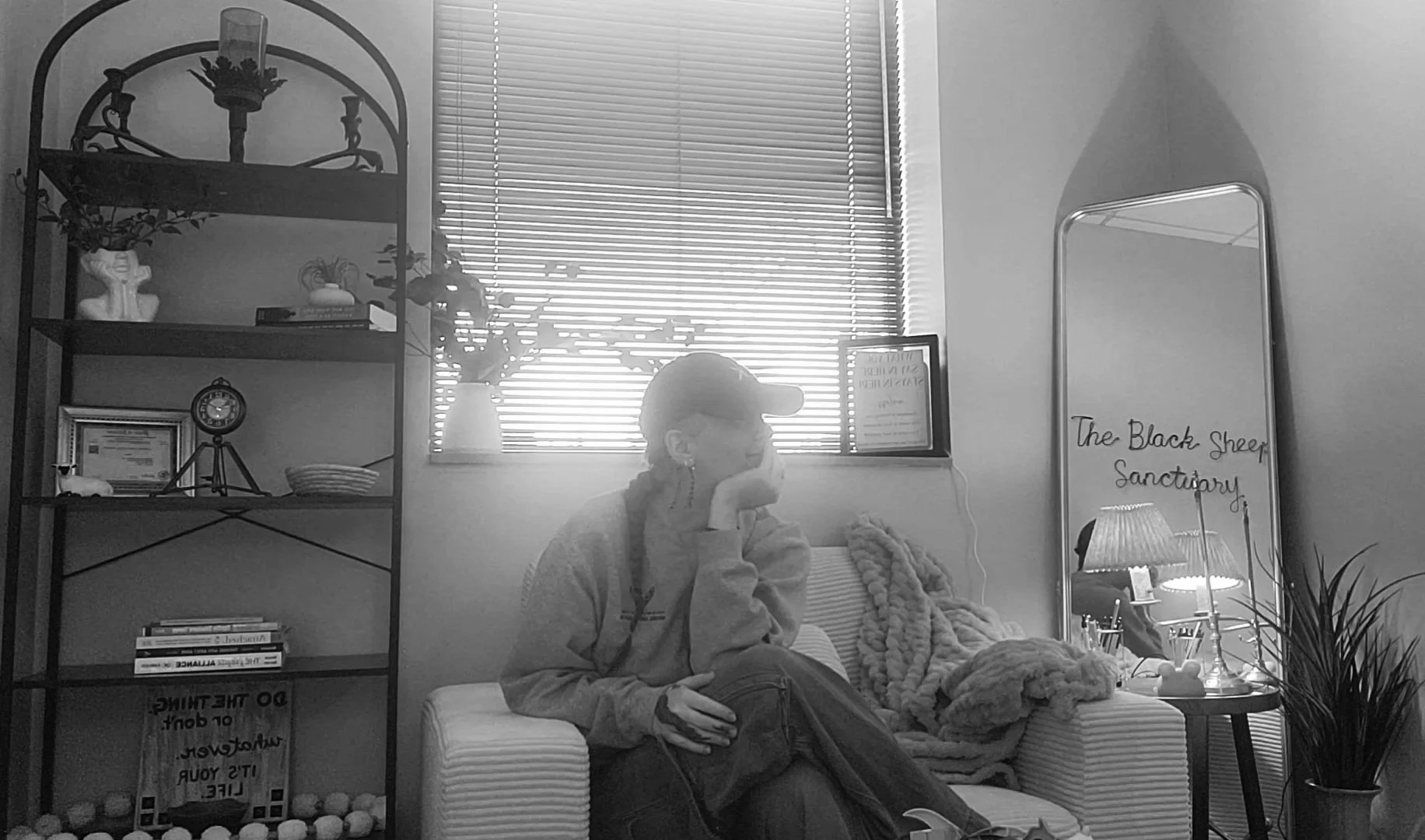
I draw from approaches like DBT, ACT, and strengths-based therapy, tailoring each session to what you actually need rather than following a one-size-fits-all formula. I also use therapeutic measures and brief assessments when helpful—not to reduce you to a score, but to better understand what’s changing, identify areas that may need more attention, and help guide our conversations. Therapy is a collaborative process, and these tools can give us another way to step back, notice patterns, and make sure our work stays focused on what matters to you.